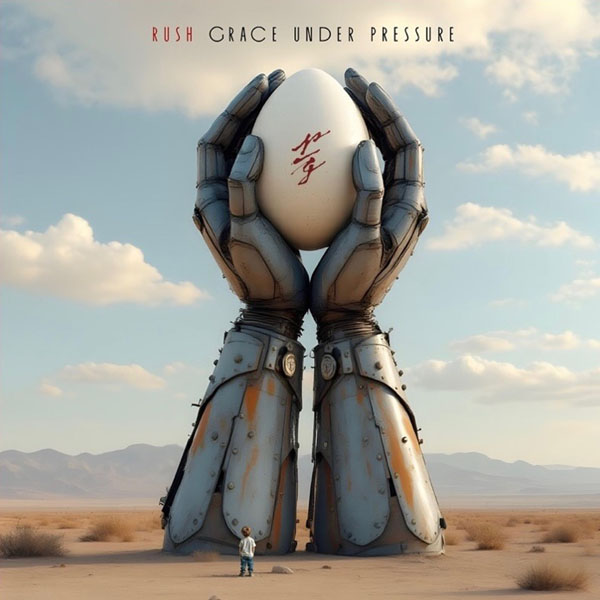
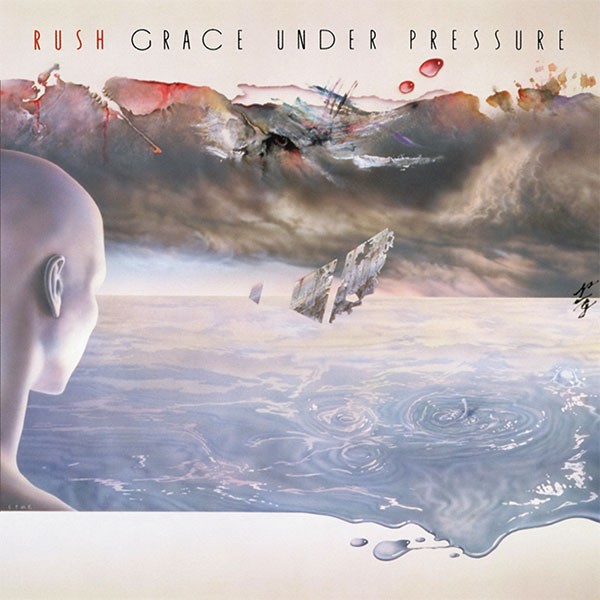
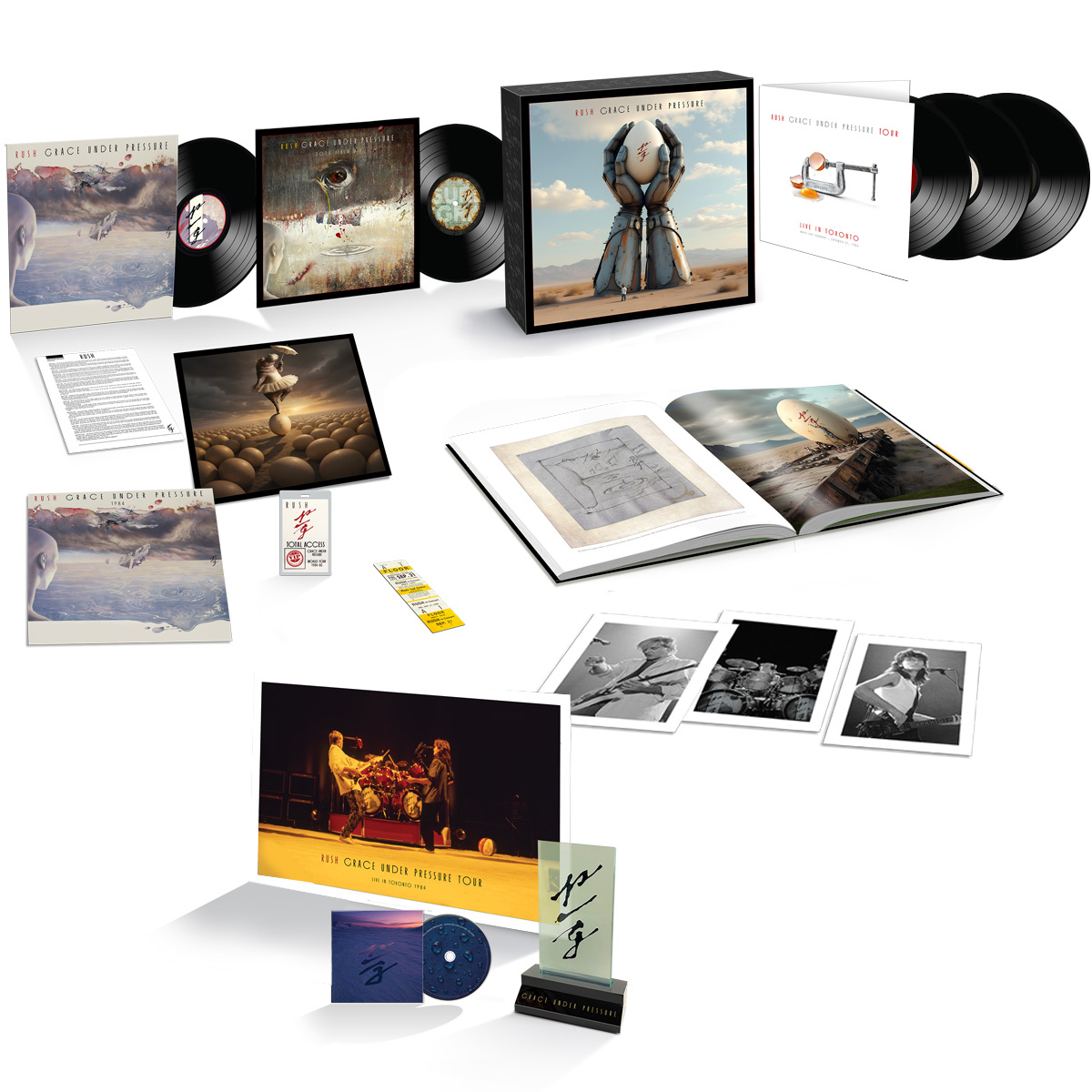
CD One/LP One: Original Album Mix (2025 remaster)
Distant Early Warning (4:59)
Afterimage (5:04)
Red Sector A (5:10)
The Enemy Within (Part I of Fear) (4:34)
The Body Electric (5:00)
Kid Gloves (4:18)
red lenses (4:42)
Between The Wheels (5:44)
CD Two/LP Two: 2025 Terry Brown Mix
Distant Early Warning
Afterimage
Red Sector A
The Enemy Within
The Body Electric
Kid Gloves
red lenses
Between The Wheels
Grace Under Pressure Tour:
Live In Toronto 1984
CD Three/LP Three & Four
The Spirit Of Radio
Subdivisions
The Body Electric
The Enemy Within (Part I Of Fear)
The Weapon (Part II Of Fear)
Witch Hunt (Part III Of Fear)
New World Man
Between The Wheels
Red Barchetta
CD Four/LP Four & Five
Distant Early Warning
Red Sector A
Closer To The Heart
Kid Gloves
YYZ
2112: The Temples Of Syrinx
Tom Sawyer
Red Lenses / Drum Solo
Vital Signs
Finding My Way
In The Mood
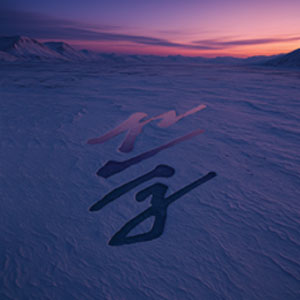
Blu-Ray
- Grace Under Pressure Tour: Live In Toronto 1984 – Concert Video in Dolby Atmos / Dolby TrueHD 5.1 / PCM Stereo
- Grace Under Pressure – Original Album Surround & Stereo Mixes
- 1984 Album Mix – Dolby Atmos / Dolby TrueHD 5.1 / PCM Stereo
- 2025 Album Mix – PCM Stereo
- Bonus Promo Videos in Dolby TrueHD 5.1 / PCM Stereo
- Distant Early Warning
- Afterimage
- The Enemy Within
- The Body Electric
- Concert & Music Videos Picture: 4:3 Pillar-Boxed / 1080i / 29.97 fps
- Menu & Album Visualizer-Picture: 16:9 Widescreen / 1080i / 29.97 fps
- Concert Audio: 48kHz 24-bit Dolby Atmos, 96kHz 24-bit Dolby TrueHD 5.1, 96kHz 24-bit PCM Stereo
- 1984 Album Audio: 48kHz 24-bit Dolby Atmos, 96kHz 24-bit Dolby TrueHD 5.1, 192kHz 24-bit PCM Stereo, 96kHz 24-bit PCM Stereo
- 2025 Album Audio: 96kHz 24-bit PCM Stereo
- Music Video Audio: 96kHz 24-bit Dolby TrueHD 5.1, 48kHz 24-bit PCM Stereo
- Region: All
- Concert & Music Videos Run Time: 121 mins / Album Run Time: 78 mins / Total Run Time: 539 mins
Improbable Dreams
A GUP Listening Session Almost Forty Years Down The Road
By Geddy Lee
Back in 1983, having taken the very difficult decision not to use Terry "Broon" Brown for the album that would follow Signals, we were fired up about entering a new phase of our recording life, keen to head down the yellow brick road to recording utopia - only to discover that the glittery golden path we imagined was more of a shitty little back-road going nowhere fast.
I shall explain.
Fueled by the hiring of a brand-spanking-new producer, our hopes had soared to euphoric heights, but spiraled quickly downward in a brutal crash of reality when at the last minute that same producer ditched us in favor of another band.
Oh, what to do? Well, after a lot of outrage and self-pity which led to howling about the sheer unfairness of it all, we shook off those feelings of rejection, regained our composure and revived what was now an increasingly urgent search for the perfect producer (whomever and whatever that might be).
We squirreled ourselves away in the bucolic Ontario hinterland, writing songs as a wide assortment of candidates flew in, one after the other, to be interviewed and quizzed on their thoughts about our music. It was incredibly educational but ultimately fruitless, as the few we wanted to work with weren't available, while those that were free didn't quite meet all of our impossibly exacting requirements. With our recording time at Le Studio in Quebec looming ever closer, we decided to change course and consider the dreaded "c" word. No, not that one: I'm talking about compromise, a concept the three of us in Rush had always found repugnant. But necessity is one mutha of invention, right?
So much brain-twisting drama before we'd even hit the record button! Yes, we could have cancelled the entire session and waited several more months for Mr. Right, but by then we were fed up with the process and, more importantly, had eight new songs raring to go and didn't want our momentum to evaporate. Accepting the bare facts that lay in front of us, we became intent on co-producing the album with a highly experienced and extremely talented engineer we'd come across late in our search.
Sounds like a simple solution, yes? Fuck no, it was anything but. By then our songwriting had taken us to a different musical place, an expansion of our soundscape with a range of new technologies - not just keyboards and samples, but electronic drums too, while getting to know the new dude behind the console with a very different working style.
We'd sorely underestimated how much objective responsibility the multitude of production decisions would demand of us - myriad complexities, laying down tracks, overdubs, mixing... the lot. Believe me, it was a long and effin' cold winter. The whole thing took a major chunk out of us as a band and me as a human being, and by the end of it we were emotionally and physically spent. I had poured so much of myself into finding that perfect producer and then pushing for every other kind of perfection throughout those frustrating sessions that I ignored all the signs of dereliction of duty to my wife and young son.
After five intense months, it still wasn't over for me. I was the one who had to take the tapes to our old friend and brilliant mastering engineer Bob Ludwig and painstakingly sift through the innumerable so-called "final" mixes with him - multiple versions of each song with such titles as "Final DEW w/vocals up", "Final DEW w/guitars up" and "Final Kid Gloves w/guitars down". No joking, there were at least five or six mixes for every song, with small yet perceptible differences for each, enough to wreak havoc on the most discerning ears. (What's more, I was dissatisfied with the tone I'd been getting from my Steinberger bass on a couple of songs, and pushed Bob to work his magic to bring out more bottom for them.) It was a classic case of option anxiety, but I kept my focus, doing my damndest to represent my bandmates by making even-handed decisions right up to the eleventh hour, until we had finally assembled the definitive version of Grace Under Pressure as you know it today.
In the end it all stood up bloody well, in his finely tuned room at least, but at the time my nerves were too frayed to get excited. What doesn't kill you makes you stronger, right? (What idiot ever said that?)
While I was in the throes of writing my memoir, a conversation I'd had with Neil late in 2019 kept coming back to me. Towards the end of his time on this planet, he made a point of listening to all of our albums, doing a quiet retrospective of his life's most significant work. It was during this period that Alex and I visited him at his home. After dinner we wandered out to the balcony so he could enjoy a smoke and the two of us could chat about life, the birds of Santa Monica and, as ever, music. He told me about the listening sessions he'd devoted himself to, and expressed in no uncertain terms how proud he was of all that we'd accomplished together - not just as a band but specifically of the musical adventures he and I had dreamed up as the band's rhythm section.
That conversation will always be precious to me because, sadly, it proved to be our last. It got me thinking that maybe I too should take the time to review each and every album with a view on gaining fresh understanding of our creative history, which in turn, might be a positive influence on my own writing and playing going forward.
So I did. I listened to them all! As you can now imagine, recalling the grisly details of those Grace Under Pressure sessions in particular made me a little afraid of approaching the record; would reviving those recollections warp or tarnish my view of the work? I guess some masochistic part of me was dying to find out, because after nearly forty years I steeled myself and gave it a whirl. I wrote down my immediate reactions, noting the moments I loved and those I felt had maybe missed the mark. It was quite a journey - one that brought back a boatload of memories.
First up was "Distant Early Warning", one of my all-time fave Rush songs. I love the statement it makes as it kicks off the album; right away it sends a message that this record is a very different beast from Signals, with its dynamic crossfire between Alex's raging guitar and those off-time keyboard punches, each staying pretty much out of the other's way. It's also topical - even more so in our dire 21st century, surely. The picture it paints of ill winds, acid rain and heavy water is as pressing as ever, but it works on more than just that one level, which I believe is when lyric writing is at its best. It invites the listener to bring their own imagination and sensibility to the song, and (dare I say) it has a catchy chorus to boot!
From a production point of view, it has an urgent and realigned Rush sound. My only criticism of this track is the key I chose to sing the verses in. It's too low, especially after the intro's tumult. To my ear the opening vocals of this song, which are also the opening vocals of the whole album, slips in rather meekly. I imagine that back then I wanted to express a sense of vulnerability, but now I feel it lacks the authority the lyrics deserve. (I do remember worrying about that every time it used to come on the radio, and a year later when we interviewed Peter Collins to see if he might be right to produce Power Windows, one of his first criticisms of GUP was the very same thing. My ears pricked up; I was sold on him immediately.)
If I may get a wee bit nerdy here, this is also the first time we hear a couple of new instruments: my headless wonder, the Steinberger L2 bass; and my latest musical gadget, the PPG Wave 2.2 - in essence a polyphonic synthesizer that, coupled with its computer add-on, the Waveterm A, could sample sounds and let the operator mold them using typical analog functions. Those German-made devices were all the rage at that time, most notably used by Trevor Horn, The Fixx, David Bowie, Depeche Mode and Tears for Fears. It was the cool synth of the early-to-mid ‘80s, and its sounds are all over Grace Under Pressure. When I recently put the record on, I was really surprised how heavily I had leaned on it, and how identifiable those sounds still are. Turns out that GUP is a PPG showcase!
After "Distant Early Warning" comes "Afterimage," a collective emotional outpouring at the time, a tribute to Robbie Whelan, our friend and co-worker at Le Studio who'd tragically died earlier that year in a car accident just around the corner from the studio as he was racing to work. We'd recorded four albums together with him there, and in all that time the five of us, including Broon and engineer Paul Northfield, had become very close.
Robbie's presence had always helped to lighten the mood, especially during tough overdub sessions in the control room (which, in the Rush lexicon, we named "the doctor's office;" whoever's turn it was in the recording hot seat, the rest of us were obliged to say, "The doctor will see you now"). Back at Le Studio under acute circumstances and with a new producer/engineer at the helm, his ebullient charm was sorely missed.
After work we'd all play volleyball together (even in the snow), and during summer sessions he and I shared our love of the Montreal Expos by watching and listening to their games between recording takes. But Neil was especially hard hit, as his fondness for the Laurentians had brought him to purchase a vacation home not far from the studio and he'd spent a lot of his off-time skiing and bike riding there with Robbie. He had yet to experience the loss of someone so close who wasn't a family member, and was scrambling to make sense of it. As such, he found himself compelled to put his thoughts down on paper in the form of "Afterimage"... and of course the album itself was dedicated to Robbie's memory. Since "Afterimage" is so thoroughly mixed up with my deeply personal feelings and memories, I find it impossible to judge it objectively, but I can see how earnest and spirited the intentions behind it were, and I'm struck by its lush, emotive instrumental middle section. It's one of the most heartfelt pieces of music we ever put down on tape, and in spite of its intimate subject matter, the song was chosen (along with three others) for video production.
This was the time of the MTV revolution, when record labels were urging every band to make not only a great record but also a "breakthrough" video, and the cost of these videos was rapidly exceeding the actual recording budget. Think about that for a moment: record companies were willing to spend more money on a video than on the record itself. That insane concept should help you understand the power that MTV had over the music industry back then. As far as we were concerned, the idea that a band like Rush could even have a hit video felt absurd. I mean, we weren't exactly fashion icons or beauty queens, and besides, we didn't even know what our image was! Nevertheless, we tried to approach it as artfully as anything else we did, choosing three different directors to make the four songs, each in a markedly different style.
To come clean, the idea of making videos appealed to my secret filmmaking aspirations. In the ensuing years I'd become the Rush's de facto point man for most of the band's visual projects - be they mini-movies, animations, stage designs or videos. Of course, we all discussed and approved everything as one, but since I had the most interest in the medium, my partners happily let me run with the ball.
For "Afterimage" we chose Tim Pope, known then for his hip, often avant-garde work (much but by no means all of it for The Cure), and I very much appreciated the way his vision broadened the perspective of the song. Depicting a Victorian child grappling with the sudden loss of his mother, it took what was such a personal statement and emphasized the universality of grief and bereavement. Tim handled the whole thing with a great eye for detail and a beautiful aesthetic.
To direct "Distant Early Warning" we chose a fine fellow named David Mallet, an ambitious and big-budget director who'd achieved success with bands like Def Leppard and David Bowie - in particular his award-winning video for "Let's Dance." He and I collaborated on the Close Encounters meets Dr. Strangelove concept, and brought in Rush's album cover artist Hugh Syme to add some visual flair to the set design. I was very pleased with the swirling, whirling results.
The last video was a two-in-one idea, where Anabelle Jankel and Rocky Morton used the same dystopian concept for both songs: "The Body Electric" acts out the lyrics in a cyborg escape drama, while "The Enemy Within" is more of an interior meta-drama, but they use the same set. Very convenient for budgetary reasons!
Back to my listening session now, next up is "Red Sector A", which sounds much as I remember it, since over the years it became a staple of our tours, and we played it so often that it's firmly embedded in my memory banks. There's a clear musical and technical connection between it and "The Weapon" from Signals, both having the same Roland Jupiter 8 keyboard arpeggiator vibe. It's one of only a few Rush songs with no bass guitar on it at all. (What was I thinking?) However, it's Alex's superb guitar work in the middle section that really jumps out at me. I mean, I know he's my BFF and all, but no other guitarist plays or sounds like him... no one! It's epically, hauntingly constructed and builds the song to a brilliant climax. You can clearly hear how he's experimenting, using chordal riffs as much as possible in place of the busy runs of individual notes typical of most guitar solos. He is one inventive dude.
Lyrically, it was inspired by a conversation Neil and I had about my mother's experiences of the Holocaust and her emotions at the moment of her liberation from the Bergen-Belsen concentration camp. It captures her shock that being liberated after over five years of incarceration was even a possibility, as well as the despair at realizing how the world at large had failed to act sooner. Neil took those feelings and put them in a futuristic context, borrowing the title from the name of the VIP section at the Cape Kennedy Space Center from which the band had been privileged to witness the launch of the Space Shuttle Columbia in 1981.
There are a couple of truly lovely surprises for me on this record. Hearing "Kid Gloves" today, I effin' love it! It may not be appropriate for me to say so myself, but I think it stands out as a well written song from both a lyrical and melodic point of view. A punchy song with tightly arranged melodies revolving around a cyclical arpeggiated guitar riff, it captures our mindset of that period, echoing the sonic attitudes of contemporary bands we liked such as Ultravox, Propaganda and XTC, but with our own hard rock eccentricities. I dig the way the PPG's fluid saxophone-like growls lie under the guitars during the choruses, and I clearly remember the day Big Al recorded that wild and blistering solo: he'd put down several sensational takes, in fact, too many to choose just one, so in the end we stitched together the best pieces of two or three of them.
The other surprise is a whimsical, rhythmic oddity called "Red Lenses." It's damn funky, in my humble opinion - well, as funky as we three white Canadians ever got, I guess! Originally intended as an instrumental, it morphed into a less than traditional song whose punning lyrics riff off the "redness" concept, with Neil venting about the way newspapers thrive on the world's most maddening tendencies. Like in "The Enemy Within," the Steinberger had the perfect bass tone for its soundscape; all that lower mid-range perfectly suited the playing style that the song demands, especially when it's popping its way out of the outro. And again, the PPG brass section builds and builds magnificently throughout the song. I'd simply forgotten how much I liked this weirdo jam!
"Between the Wheels" finishes the album in a powerful, ominous and brooding fashion, apropos the album title and the circumstances we found ourselves in when making this record. For most of these sessions we felt like we were indeed stuck between a rock and hard place. Underscored by passionate performances, the song is lyrically very strong. Despite its tough imagery and the less than optimistic sentiment of its chorus, there lies a tiny shred of hope at its core - the cyclical wheel of life. It's a heavy song, but not in a typically heavy way. I believe that the production of this track is proof that our experiment in trading off somewhat hip keyboard sounds (Nah. Everybody knows we ain't hip, right?) with some truly earth-shaking guitar riffs actually worked out the way we had hoped.
So, all in all, did we manage to accomplish what we had set out to? Hearing Grace Under Pressure a mere thirty-seven years since we created it, I've been able to drink in the music and its production almost as impartially as any regular listener might. And I've come to realize that after the countless exasperating struggles we faced from the start to the finish of this aptly titled saga (and in spite of my insistent bitching), it was all...entirely...worth it.
Pressure Release
By Neil Peart
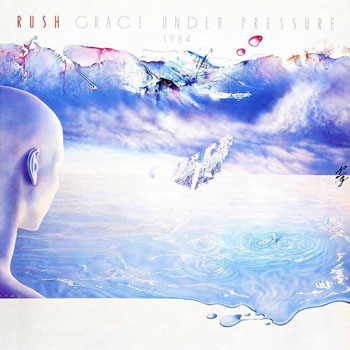
GRACE NOTE... Now let me just think about this. I guess shortly after the release of our Signals album we began to think and talk of the future. In the early part of the tour, our long-time friend and co-producer, Terry Brown, flew down to meet us in Miami. After the show, riding on our bus through the dark and steamy Florida night, we sat back, drinks in hand, to discuss our future course.
Alex, Geddy and I had been discussing these things for a while now, and had decided that it was time for us to strike out on our own, and try working with someone else. We wanted, no needed to find out if someone, perhaps from a different background, might have different approaches and different techniques to offer to both our music and our sound.
UNDER LINE... It was important (and difficult) for us to express to Terry that this in no way signified a dissatisfaction or lack of confidence in him. It was just that after almost ten years and eleven albums together, we had evolved into a comfortable and efficient recording team, the four of us, and we could even pretty well predict each other's opinions and reactions to different ideas. As positive as this situation may sound, this is exactly what we were worried about.
PRESSURE POINT... Still, it's no easy thing to tell someone that after all this time you want to work with someone else for a change - and still harder to be told it. It was tough for us, and it was tough for Terry. We had been through so much together, and he has contributed so much to our development and refinement - both as people and musicians. It was awkward, difficult, and even a bit painful, but we had to do it or always wonder "what if we had?" While objectively one may recognize the right thing to do, subjectively it's sometimes too easy to rationalize the easy way out. We had to cut the umbilical cord.
GRACE NOTE... At first, "The Great Producer Hunt" was a lot of fun. We searched through the credits of albums we liked, and we made lists. Tried to figure out "who did what to whom." Was the producer or the artist more responsible for the ideas and textures that we were responding to? Would so-and-so be of more benefit to us in a creative, musical sense, than would so-and-so in an interpretive, production sense? This kind of stuff is fun.
UNDER LINE... But it was time to get serious. People were contacted. Who is available? Who is interested? During out European tour of '83 we met with a number of producers and engineers of the English persuasion. "Well, so-and-so has a really nice manner, but so-and-so really seems to know a lot!" We talked and talked with them about sound, about music, about other people they had worked with, about Method, about Technique, about studios and effects. If nothing else we learned a lot just from all that talking. Then we talked among ourselves, wondering. We made a decision --
We would pick Mr. So-and-so!
PRESSURE POINT... And everything seemed pretty nice for a while there. We met again with the illustrious Mr. So-and-so, discussed our mutual ideas, criticisms, habits, and tastes, and we came to an understanding.
Then, only two weeks before we were to start working on new material we got The Call. "Mr. So-and-so has decided that he's not the right person for the job." Right. Great.
GRACE NOTE... Naturally, we were a bit shaken at first - wind out of the sails etc. - but it turned out to be a very positive time for us. Another list was made, more people were contacted. Who is available? Who is interested? Time was growing shorter, but we were determined to find someone. Some people urged us to go ahead and do it on our own, as we certainly could have done, but our intention was to work with someone new - and we were going to!
All of our unemployed friends began to volunteer.
UNDER LINE... The important thing was, we were suddenly totally on our own, responsible to make the decisions and set the wheels in motion. Of course, there were people behind us to help with the organizing and contacting, but the rest was up to us. This really drew us together and gave us a strong resolve and a mutual determination to make a really great record.
Doing well is the best revenge.
So, we contacted Mr. Whosis, yet another English producer of great musical and technical ability. We met with him at our rehearsal place, and he had much to contribute in terms of arrangement and interpretive ideas. He seemed to be very interested in working with us as well, and just had to sort out "a few complex little problems" in order to free himself to do the project.
Great!
PRESSURE POINT... Not so great. These "complex little problems" are somehow insurmountable, and Mr. Whosis cannot make himself available. For crying out loud!! Now this began to shake our confidence a little. "What are we - chopped liver?"
Back to the list again. Who is available? Who is interested? Of course, by now we were getting closer and closer to the time booked for the studio, and week by week we are postponing it. And, naturally enough, a lot of people with whom we would have been interested in working, are already committed to other things by now. Yikes!
GRACE NOTE... All was not doom and gloom, however. In mid-August we had begun to work on new material, and we poured our determination and angst into that. On the first night, while we were just "banging around", we put together the three parts to what would become "Between the Wheels." Within a few days we had written "Kid Gloves" and "Afterimage", and we, at least, began to feel more confident with ourselves. By the end of three weeks we had written and made rough "demos" of those three, plus "Red Sector A" and "The Body Electric." We had that to be happy for.
UNDER LINE... The fact that we had already booked studio time wasn't the only deadline hanging over our heads. Anticipating that we would have everything sorted out by then, we had agreed to play a series of shows at Radio City Music Hall in New York in mid-September. Not having played live since summer meant that we would need a week of rehearsals to get toned up for that.
Our usual habit after writing new songs was to go out and play a few small shows, a few big shows, and then go right into the studio. This time we felt it would be suitably dangerous to come right out of hibernation and on to one of the most prestigious stages in the world. (Weren't we brave!) Since we were definitely not ready for the studio as yet, we returned from New York to the rehearsal place and continued working on material while we were looking for Mr. Good-ear.
PRESSURE POINT... And the hunt continued. Phone calls, telegrams and telexes flew around the world. Anyone we could think of whose worked we liked, we contacted, no matter how unlikely they seemed. More people were brought in to see us. Messrs. Alpha, Beta, Gamma, and Epsilon came over, and we went through a quadruple deja-vu - repeating the same conversations about what we wanted from a producer, what we wanted from our music, what they had done, what they could do, what was important, what wasn't - etc., etc., etc.
"Just two things we're looking for in a producer; ideas and enthusiasm."
GRACE NOTE... We adopted "Roger Kneebend" as our mascot producer - a ten inch tall action doll (formerly owned by Geddy's son Julian) replete with flippers and wet suit. He was placed prominently atop Alex's tape machine - so he could stay on top of the recording! (Groan)
Then it became four things we required in a producer; ideas, enthusiasm, flippers - and a wet suit so we can spit at him!
Yep, we were losing it!
UNDER LINE... It was a tough thing we were putting these guys through. By this time we had written and recorded "Distant Early Warning" and "The Enemy Within", and had begun work on "Red Lenses." Our method was to talk in general ways to each of the "candidates" until we began to feel a bit more comfortable with each other, and then at some point play all of these songs - and expect them to offer intelligent criticism and suggestions. Then, on the second day we would choose a song for which they had some ideas, and work on it together. No question, they were on the spot in a big way - but so were we!
PRESSURE POINT... Peter Henderson was a bit of an unknown quantity to us at the time, but perhaps because of that we had high hopes for him. He arrived from England one sunny afternoon, and we greeted each other a bit nervously. We sat on the floor of the rehearsal room, amid all our gear, and, like dogs meeting in the road, we sort of metaphorically sniffed 'round each other. As often happens, friendship and mutual respect began to grow out of a discussion of other peoples' music. Shared likes and dislikes on such a personal subject can be so important. One of the things that most impressed us about Peter immediately was that he was obviously - like ourselves - a tremendous fan of music. If we spoke of a group or a song that we liked, it was in terms of the second song on side two, or the third track, side one - knowing the titles and the order - the way a fan does. Not as if we were "talking shop" but just talking about a subject that interested us all. This we liked.
GRACE NOTE... After dinner that night we played him the songs, and went through the same rap again about the flaws in the songs, what we really wanted it to be like, our feelings about perspectives and possible improvements and what did he think about this or that idea?
Well, he thought the kinds of things we'd hoped he would, and expressed them in a very intelligent and confident way. When he had left the room that night, the three of us turned to look at each other - smiling and nodding. Eureka!
But, we were still pretty insecure from our previous disappointments. Would he feel he was "the right man for the job"? Would he have some "complex little problems" which he had to sort out? Would he disappear and never be heard from again? Probably.
We were determined to ask him first thing in the morning if he would like to commit himself to the project. After breakfast, we told him that we felt he was the man, and asked him if he were interested.
"Well", he replied with a dry English smile, "I wouldn't have come all the way over here if I wasn't interested, would I?"
"ALLRIGHT!" "GREAT!" "LET'S GO!" we chorused.
Then someone thought to add: "Oh, by the way - do you have a wet suit?"
UNDER LINE... So away we went, off to Le Studio to finally begin recording. We could hardly believe it! These songs had been demoed, rearranged, and demoed again so many times - we though it would be easy. (Ha!) Of course, we had to get to know each other, to develop a working relationship - and start to have some fun with each other. It was around this time that the title "Grace Under Pressure" was suggested. Not only was it relevant to so many of the songs, but it was also rather fitting to the way this album was going. The fact that we didn't always exhibit this quality made it none the less a desirable one! It seemed appropriate.
PRESSURE POINT... I have mentioned that we had worked with the same co-producer for a long time now, so we had to (and were determined to) start right from the ground up in making things as different as we could. For myself it was a welcome opportunity to try some new approaches. It would be too easy to just do what we had had good results from in the past.
So; I am hitting different things out in the studio, Peter is twiddling different things in the control room, both of us a bit wary of the other. Suggestions and opinions are exchanged, we try some more different things, and a good basic sound is finally achieved. We move on to the bass, then the guitar sounds, and soon we are working away at "Distant Early Warning."
GRACE NOTE... 1983 was a tough year for many people, no question about it - but wasn't the weather nice? I can't remember a more glorious summer, nor - and some may disagree - a more glorious winter. Our time off before writing, and the August and September of the writing period, were so hot and incessantly sunny that it was almost tropical. (And as much of a struggle sometimes as in the tropics to get any work done!) Then while we were in the studio from November into March, it was bitter cold and we had tons of snow. Five or six feet of it must have fallen through the winter - heaven for the cross country skier. (Me.)
The crew arrived to load in at the studio with the first big storm of winter, ill-prepared in running shoes and light jackets. Early that first morning they were all off to "Mickey's" in Morin Heights, to return resplendently clad in giant green hunting boots, and very attractive ski jackets.
Our crew are also very "graceful under pressure."
UNDER LINE... Yes, it was a year of crisis and tragedy - both globally and on the home front. While we were at "Writing camp" the Toronto 'Globe & Mail' was delivered to our doors each morning. Since it was there, I found myself reading it over breakfast every day, before I would start working on lyrics. The topics of the day, especially as expressed in the editorials and letters to the editor were necessarily on my mind, and this circumstance affected the lyrics to certain songs profoundly. This was the time of the Korean 747 murders, the on going cruise missile controversies, acid rain (one of my pet protests) was large in the Canadian news, wars raged everywhere - and we, our families, and our friends were trying to cope with economics, death, illness, stress, romantic problems, unemployment, and depression. (Well, not all at once!) Songs like "Distant Early Warning", "Red Lenses", and "Between the Wheels" were definitely interwoven with these thoughts and feelings. Like the newsman Peter Trueman says: "That's not news, but that too is reality."
PRESSURE POINT... There is a certain state of mind, not exclusive to musicians, which is called (in medical terms) "The Black Ass." Things in your life may be whirling just a little beyond your control, it may be "one of those days" when humanity and fate conspire to throw obstacles in your way - or maybe you're just "too tired". Everybody gets their share of dark clouds.
You're working away at a song that you know can be good, but it just won't be. You sit in the studio with aching hands and heavy heart, unable to deliver the performance that the song demands, after grinding it out for so long. You listen to a playback of something, and when it's over, no-one says anything. Pregnant silences. Avoiding eyes. (Anyone know a good joke?)
A certain tension descends at these times. The room is silent. Everyone knows something is wrong, but no-one really wants to be the one to say "it ain't right." To criticize is to presuppose an alternative, to suggest an idea is to put your own pride on the line, to expose your vulnerability to possible rejection and disagreement. To listen to someone else's idea, with which perhaps you do not agree, is a challenge to your objectivity and self control. It's hard to say what's right about it before you say what's wrong about it.
Handle with kid gloves, handle with kid gloves. Indeed.
GRACE NOTE... Oh well, of course we had some fun too! The "Commons" hotel was sometimes a welcome watering-hole at the end of the day (or night, really). We played volleyball until the snow got too deep, tried to drive the rental car across the lawn after the snow got too deep. (Alex's idea, naturally) We practiced our "snow diving" off the porch into two or three feet of fresh snow. Skip and Larry decorated the little guest cottage, ("The Little House on the Driveway") with Christmas lights and a wreath. Peter, Alex, Geddy and Larry got up early to play tennis, I got up early to go skiing, Skip got up early to come home from the "Commons" and Jack got up early to roll over.
And yes, from time to time we had visitors from "The Outside" a brief interlude with family or friends made a terrific change from looking at each other all the time. The great people at the studio, Andre's wonderful food, and the fantastic library of movies ("The Man With Two Brains" was a big hit this time) helped to provide diversion and make us as comfortable as we could be (considering our condition!).
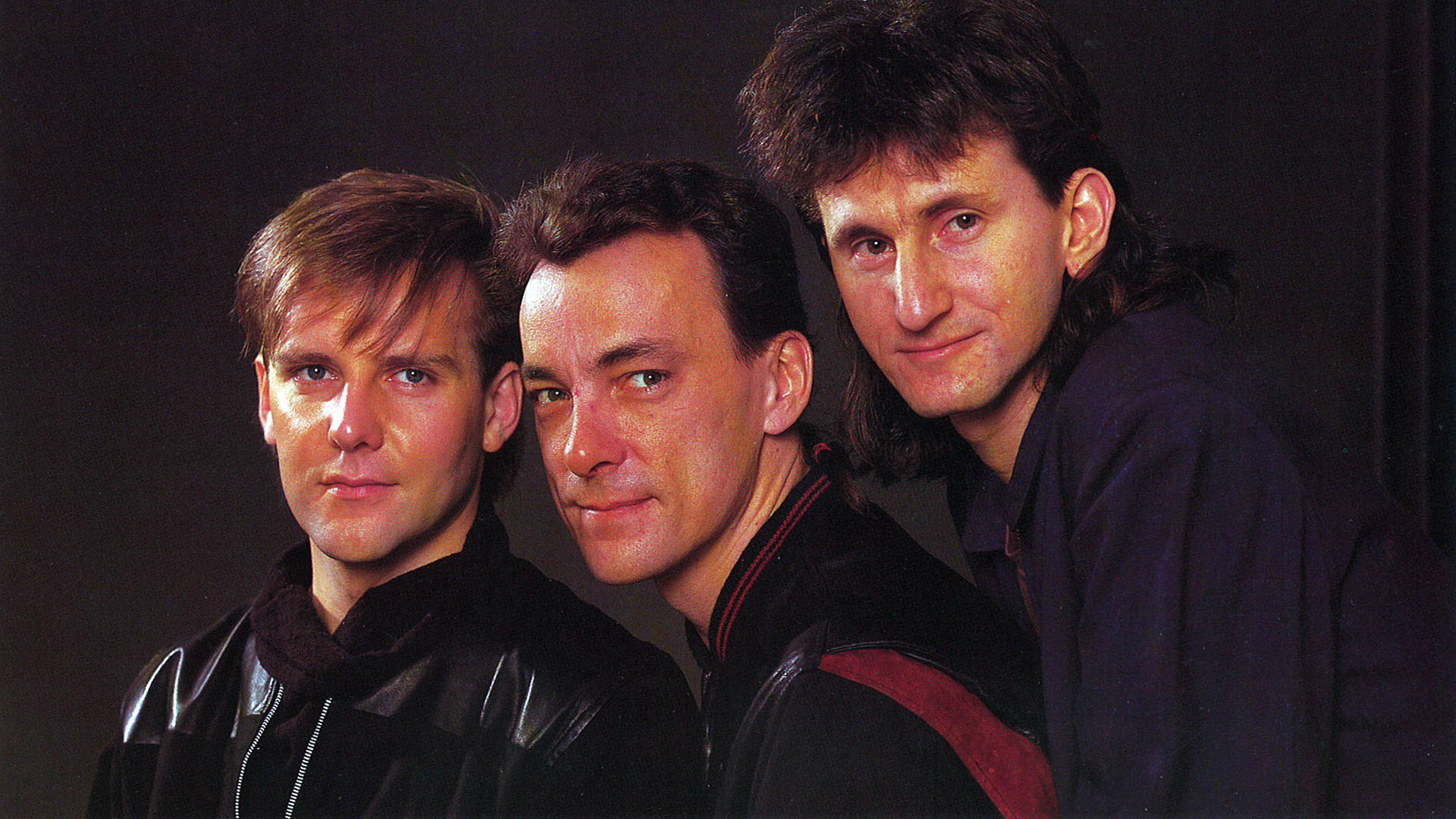
We enjoyed a pleasant day in Ottawa, having ourselves immortalized by the famous portrait photographer, Yousuf Karsh. It was an inspiring and elevating experience to sit before the lens of the portrayer of kings, queens, presidents, popes, astronauts, authors, scientists and film stars. And there he was, taking an album cover photo for bums like us! It was wonderful to see, at his seventy-five years of age, his tremendous energy, creativity and swift changes of mood. He provided us with a memorable and broadly applicable quote when told that the lights in the room were not independently adjustable: "That is not an answer that I can accept. That is not an answer that I can accept!"
I wish I had said that. (I will, I will!)
UNDER LINE... By this time we had completed the basic tracks, a couple of months of keyboard, guitar, percussion, and vocal overdubs, and we were beginning the mixing stage. It was all taking a lot of time, but at least things were progressing.
Throughout this period I was in a daily (or twice, or thrice daily) communication with our art director, Hugh Syme back in Toronto. He was "herniating" (his own word) over the cover painting, and I tried to offer what help I could over the phone, without actually seeing it. (Difficult, you may imagine!) Detail after detail of the artwork was ironed out, the credits painstakingly compiled, the lyrics corrected and typed up for the typesetters, the photograph and typeface chosen, inner sleeve and label designed - until one day a transparency of the painting hangs on the window at the studio, beautifully lit by the sun on the snow behind it - and Hugh can get some sleep.
PRESSURE POINT... But not us. By this time we were decidedly late, as our record company and the advancing year were more than eager to remind us.(as if we needed reminding!) The pressure was on. Fourteen hours a day became the norm, with dinner hastily eaten right in the studio lounge. But why, after all, shouldn't the mixing be as stubborn as everything else? (You expect a break or what?)
Admittedly, in these last few weeks things began to drag on a bit too long. It became more and more difficult to concentrate on life outside the studio, life becomes so cloistered, like some weird monastery. One drifts farther and farther away from the everyday affairs of your family and friends. Mail piles up, neglected business rises even higher, but everything seems somehow remote in the grip of this crazy obsession. Time to go away now!
At this point we had another series of meetings, this time with the video people. We had decided to try and get moving on that end of things as soon as we could. We knew we wanted to use several different directors, and do quite a few songs in different styles, but what songs? - and which directors? All of these songs would make good videos, but we only had so much time - actually so little time.
SAVING GRACE... But yes, finally it is done. Fans and critics have yet to pass their judgments, but we are well pleased. Our records tend to follow in cycles, some of them exploratory and experimental, others more cohesive and definitive. I think that this one, like Moving Pictures, Hemispheres, or 2112 before it, is a definitive one of its type. An indefinable thread, both musical and conceptual, emerges in a natural way, and links the diverse influences and approaches into an overall integrity.
Of course, to arrive at this happy station, all of the experimentation and exploration is shown to be worthwhile. We are glad that most of our fans understand, appreciate and support this fact. As we approach our ten year milestone, it is more than ever important to remain true to our youthful ideals; to resist the urgings and demands of the shortsighted, the narrow-minded, and all those who are fearful of change.
We think that we can adapt. We are determined to remain - as far as ever we can - graceful under pressure.
Or at least try not to scream out loud.
A Rush Newsreel
ALEX LIFESON: LEAD GUITAR
GEDDY LEE: BASS GUITAR, SYNTHESIZERS, LEAD VOCALS
NEIL PEART: PERCUSSION, LYRICS
Early 1974
Debut album, Rush, released in Canada on the band's own label, Moon Records. Import copies begin to surface in America, and several thousand sell in the Cleveland area alone.
August 1974
Mercury Records signs Rush and releases first album, Rush, in the US to coincide with a debut tour. Neil Peart joins the band as drummer and soon-to-be chief lyricist.
Early to Mid 1975
Second LP, Fly By Night, released in February as Rush begins a four month ground-breaking tour as the special guests to Aerosmith and Kiss. Rush receives their first Juno Award (the Canadian Grammy) as Most Promising New Group. Trio records and releases their third album, Caress of Steel.
December 1975
Group earns first of many Canadian gold LPs for Fly By Night.
Early to Mid 1976
Rush releases their breakthrough album in the States, 2112. Group appears for three sold-out nights at Massey Hall in Toronto, and records the shows for a live album. Rush receives two more Canadian gold records for Rush and Caress of Steel, and releases All The World's A Stage, a live, double-album.
Mid 1977
Rush plays first tour of England to excellent response. In September, A Farewell to Kings is released, the most adventurous Rush LP to date, and a US tour commences.
November 1977
Three Rush albums are certified gold on the same day in the United States: 2112, All The World's A Stage and A Farewell to Kings.
Early 1978
A 16-date Rush tour of England sells out two months in advance. The group releases Archives, a deluxe package including the first three Rush albums, in the US, Canada and England.
September 1977-June 1978
Rush draws well over a million people on their A Farewell to Kings tour. In June, Rush receives their second Juno award, this time for Best Group Of The Year. At this point, the band has a total of six gold and three platinum albums in Canada.
Late 1978
Hemispheres is released, and goes gold in the US by December. In December the group also sells out three nights at the Maple Leaf Gardens in Toronto, setting a Canadian indoor attendance record.
Early 1979
Rush wins second consecutive Juno Award as Group of the Year. The group begins a six week, seven country sold-out tour of Europe. During one of the band's five London dates, they are presented with a silver disc for British sales of A Farewell to Kings. Rush becomes a world-class act.
September 1979
Rush plays two isolated British dates, drawing over 20,000 fans and turning away thousands more.
Early 1980
Permanent Waves is released, and the LP soon reaches #4 in the Billboard pop album charts three weeks in a row, and climbs to #3 in the UK charts. By March, Permanent Waves goes gold in the US, platinum in Canada, and silver in the UK. Rush becomes the first act to sell out the 12,000 seat Amphitheater in Chicago for four nights. While other acts find their concert attendance down, Rush's tour plays multiple nights in large indoor venues in St. Louis (3), New York (4), Milwaukee (2), Chicago (4), Seattle (2), San Francisco (2), Los Angeles area (4), Detroit (2) and Dallas (2). Consistent sell-outs across a five month tour.
April 1980
Rush and each individual member place in the Top Ten in every applicable category in Sounds and Melody Maker readers polls in Britain.
Late 1980
Rush records Moving Pictures, their most elaborate venture yet. By now the group has six silver albums in England, including Permanent Waves, 2112, All The World's A Stage, A Farewell to Kings, Hemispheres and Archives, the three-disc compilation set.
Early 1981
Moving Pictures is released, and by now Rush are an AOR radio staple in America, with heavy airplay on 98 percent of the album stations in the US virtually out of the box. The album tops the airplay charts for weeks on end, and Rush embark on another sweep of US concert halls.
Mid to Late 1981
Rush becomes the only group to score three US platinum albums (for 2112, All The World's A Stage and Moving Pictures) in 1981, and are also nominated for a Grammy for Best Rock Instrumental for "YYZ." By the year's end, Rush have been seen by over a million fans, who clamor for yet another live album. Rush releases Exit...Stage Left, a live set, in response.
Early 1982
Geddy Lee's guest vocal spot on the single "Take Off" from the Mercury album The Great White North by Bob and Doug McKenzie (alias Second City TV's Dave Thomas and Rick Moranis) is a certified hit, with the single going Top Ten in the US and the album going gold. Rush's Exit...Stage Left is certified platinum; Moving Pictures approaches double platinum. Group is nominated for four Juno Awards (including two nominations for Album of the Year for Exit... and Moving Pictures, and once again for Group of the Year). Group is voted Band of the Year in the Sounds readers poll, while Neil Peart tops the readers polls as Best Rock Drummer in Modern Drummer, Circus and Sounds, and Geddy Lee is voted Best Bass Player in Sounds.
Mid 1982
Laserium devotes a full hour show to the music of Rush, the first time Laserium has featured a complete show of one group's material (with the exception of a posthumous Jimi Hendrix presentation in the guitarist's hometown), which becomes the most successful Laserium presentation to date during its run at Seattle's Pacific Science Center. Meanwhile, SelecTV begins airing the Rush concert film, Exit...Stage Left, across America with FM simulcasts in various markets.
September 1982
"New World Man" is released to immediate and amazing response at FM radio. Trade reports are filled with raves from the programmers and their public as "New World Man" has listeners "clamoring" and "screaming" for Signals, which follows soon after. Laserium mounts yet another Rush presentation in planetariums in Los Angeles, Seattle, Pittsburgh, Louisville, Denver, St. Louis, Montreal, Toronto and London, England - a debut of Signals and totally new laser effects, the first time Laserium has premiered a new group's album simultaneously with entirely new visuals.
Early 1983
Signals goes platinum in both the U.S. and Canada. THE NEW WORLD TOUR of America sells out, over one million fans.
May 1983
Rush tours the U.K., selling out Wembly Arena four consecutive nights.
September 1983
Radio City Music Hall, New York City vibrates to RUSH for 5 sellout nights. The first Rock Act of its kind to perform a series of shows in the world famous venue.
April 1984
Grace Under Pressure is released, New co-producer Peter Henderson who produced the last three Supertramp albums at the controls. Grace Under Pressure tour begins in May taking the famous Lazerium Show on the road. Four new video projects coincide with the new release.
Original Album Credits
GEDDY LEE: Bass guitars, Synthesizers, Vocals
ALEX LIFESON: Guitars and Synthesizers
NEIL PEART: Drums, Percussion and Electronic Percussion
Produced by Rush and Peter Henderson
Engineered by Peter Henderson
Assisted by Frank Opolko and Robert Di Gioia
Recorded at Le Studio, Quebec, between November 1983 and March 1984
In memory of Robbie Whelan
Management by Ray Danniels, SRO Productions, Toronto
Executive Production by Moon Records
Art Direction and cover painting by Hugh Syme
Portrait by Yousuf Karsh
PPG Synthesizer programming assisted by Jim Burgess and Paul Northfield
Pre-production engineering by Jon Erickson
Road Manager and Lighting Director: Howard Ungerleider
Stage Right Technician, Crew Chief, and President: Liam Birt
Stage Manager: Nick Kotos
Concert-Sound Engineer: Jon Erickson
Stage Left Technician: Skip Gildersleeve
Centre Stage Technician: Larry Allen
Guitar and Synthesizer Maintenance: Tony Geranios
Monitor Engineer, Steve Byron
Concert Projectionist: Lee Tenner
Personal Assistant: Kevin Flewitt
Concert Sound by National Sound: Tom Linthicum, Fuzzy Frazer, Dave Fletcher
Concert Lighting by See Factor: The Johnson Brothers, Mike Weiss, Tom Higgins, Mark Cherry, Dave Berman, Jeffrey T. MacDonald, Frank Scilingo
Concert Rigging by Southfire Rigging: Billy Collins and Tim Wendt
Busheads and Truckfaces: Tom Whittaker, Pat Lynes, Bill Barlow, Mac and Candy MacLear, Harry Smith, Jack Stone, Red McBrine, Gordon Scott
Mille mercis à: les gens de Horseshoe Valley (Judy, Steve, Kevin, Kathy), Le Studio (André, Yaél, Paul, Richard, Frank, Robert, Solange, Lina, Nancy, Yvon, Pierre, André et Michel et le Bouffe en Broche), the Mike Stone Happy Hour, the Franko Polko Singers, Trevor and the Commons, Frankie’s Bar and Grill, Le Chasseur de Nuit, Bill Churchman, Barry Murphet, the International Scouting Organization of Cliff Bernstein, Peter Mensch, and Val Azzoli, the Griffin Family, NASA and the Johnson Space Centre, Roger Kneebend, Ann Uumellmahaye, Dr. Hfuhruhurr, Hentor the Barbarian, the Uglies, the Rory Gallagher Band and crew, Golden Earring and crew, Darrell and Werner en Allemagne, Yousuf and Estrellita Karsh (and Mary and Matthew), The B-Man, Tokyo Cro, Stuart Hall (“That's the weather, this is the time; now stay tuned for more news”), Jean Gallia et les autres professeurs de L’Ecole Berlitz, et au bureau de SRO / Anthem: Ray, Val, Pegi, Sheila, Tom, and Marilyn, et toujours notre bon vieil ami - Broon.
We appreciate the technical assistance of: The Music Shoppe (Thornhill), Biff! Ward, Marcus, the Percussion Centre (Fort Wayne),
Tama Drums, Avedis Zildjian Cymbals, Direct Synthesis, Quantec, Fostex, Loft, Richard Ealey and Bruce Anthony.
© 1984 Mercury Records © 1984 Anthem Entertainment
Grace Under Pressure Tour: Live In Toronto 1984 Credits
HOWARD UNGERLEIDER Tour Manager and Lighting Director
LIAM BIRT Stage Manager
NICK KOTOS Production Manager
JON ERICKSON Sound Technician
LEE TENNER Rear Screen Projectionist
JIM JOHNSON Stage Right, Technician
LARRY ALLEN Centre Stage, Drum and Percussion Technician
SKIP GILDERSLEEVE Stage Left, Technician
TONY GERANIOS Keyboard, Synthesizer Technician
STEVE BYRON Stage Monitors
KEVIN FLEWITT Personal Assistant to the Band
SOUND & LIGHTS SUPPLIED BY SEE FACTOR INDUSTRY, INC.
LONDON - NEW YORK - LOS ANGELES
Bob See, Elliot Krowe
THE SOUND CREW Jim Staniforth, Bill Fertig, Jason MacRie
THE LIGHTING CREW Frank Scilingo, Jack Funk, Ed Hyatt, Roy Neindorf
LASERS SUPPLIED BY LASERIUM (LASER IMAGES INC., LOS ANGELES, CALIFORNIA)
THE LASER CREW Craig Sprederman, Phil Valdivia
TRANSPORTATION Arthur MacLear, Tom Whittaker, Pat Lynes, Billy Barlow, Red McBrine, Mike Nervi, Dennis Brunken
MANAGEMENT: SRO - Ray Danniels
MANAGEMENT REPRESENTATIVE Val Azzoli
EXECUTIVE PRODUCERS William Ballard, Dusty Cohl, Michael Cohl, David Wolinsky
Super Deluxe Edition Credits
Liner Notes by Geddy Lee
GRACE UNDER PRESSURE - 2025 ALBUM MIX
Mixed by Terry Brown at Morin-Heights, Canada - March 2025
GRACE UNDER PRESSURE - ATMOS & 5.1
Mixed by Richard Chycki
GRACE UNDER PRESSURE - BLU-RAY
Menu design, encoding and authoring: Meedja Limited / Visualizers: Richard Quinn
Distant Early Warning / Directed by David Mallet • Afterimage / Directed by Tim Pope • The Enemy Within / Directed by Rocky Morton & Annabel Jankel • The Body Electric / Directed by Rocky Morton & Annabel Jankel
HD Remaster: Oli Maingay, Vanderquest
Mastered by Sean Magee and Oli Morgan at Abbey Road Studios - April/May 2025
Creative direction: Hugh Syme and Jeff Fura
Art direction, illustrations, and cover concepts by Hugh Syme
Photography from Patrick Harbron, Yousuf Karsh, Deborah Samuel
RUSH Archives: Phillip Kamen, Andrew MacNaughtan
UMe Reissue Producer: Jeff Fura / UMe Production Manager: Alex Sale
UMe Product Manager: Maddie Sillivos / UMe PR: Sujata Murthy & Todd Nakamine
Rush Team 2025: Meg Symsyk, David Steinberg, Sheila Posner and Patrick McLoughlin
UMe wishes to thank: Geddy Lee, Alex Lifeson, Meg Symsyk, David Steinberg, Patrick McLoughlin, Terry Brown, Richard Chycki, Duff Battye, Kristina Waters, Jason Klein, Andy Hawke, Andy Curran, Adrian Battiston, Chuck Bliziotis, Colin Richards, Yona Shereck, Ray Wawrzyniak, Katie Fee
All songs music by Geddy Lee & Alex Lifeson, lyrics by Neil Peart except “Closer To The Heart” lyrics by Neil Peart and Peter Talbot, "YYZ" music by Geddy Lee and Neil Peart, “Tom Sawyer” lyrics by Neil Peart and Pye Dubois, “Finding My Way” music and lyrics by Geddy Lee and Alex Lifeson, “In The Mood” music and lyrics by Geddy Lee
All Lyrics © 1984 Anthem Core Music Publishing (SOCAN/SESAC) administered by Anthem Entertainment L.P.
All rights reserved. Used by permission. Unauthorized duplication is a violation of applicable laws.
PRODUCER’S NOTE: With the Blu-ray Audio portion on the Blu-ray disc, you are now able to hear at home what we hear in the studio. This portion of the disc contains all 8 tracks from Grace Under Pressure in high resolution 48kHz 24-bit Dolby Atmos, 96kHz 24-bit Dolby Digital TrueHD 5.1, 192kHz 24-bit & 96kKHz 24-bit PCM Stereo. This portion of the disc is primarily audio-only with 4 bonus videos available in 96kHz 24-bit Dolby Digital TrueHD 5.1 and 48kHz 24-bit PCM Stereo. The 2025 Album Mix by Terry Brown was an idea Geddy, Alex and Terry wanted to explore on how the studio album would sound with a new, modern rock mix and is available on this disc in 96kHz 24-bit PCM Stereo. All of the 96kHz 24-bit audio on this disc has 256 times more resolution than a CD, providing greater detail and reproducing the music's full dynamic range, from the softest to the loudest sounds. Dolby Atmos technical specs require volume levels of content to be presented lower than most audio streams are experienced on Blu-ray discs, so all audio streams’ volumes have been matched - but that’s what volume knobs are for, so crank it up!
rush.com
A Mercury Records and an Anthem Records release, ®© 2025 UMG Recordings Inc. for the world excluding Canada and Japan,
® © 2025 Anthem Entertainment L.P. for Canada and Japan. All rights reserved. 00602478262173 / 00602478262104
Notes
- Released March 13, 2026 in four formats: (1) Super Deluxe Edition 4-CD + Blu-ray, (2) Super Deluxe Edition 5-LP + Blu-ray, (3) Super Deluxe Digital Edition, (4) Dolby Atmos Digital Edition, and (5) Grace Under Pressure Tour: Live in Toronto 1984 at video DSPs.
- Includes the original album mix remastered in 2025, as well as an all new Terry Brown mix plus the first-ever complete setlist of Rush at Maple Leaf Gardens in Toronto on September 21, 1984, newly mixed from the original multitrack audio masters and retitled Grace Under Pressure Tour: Live in Toronto 1984. The Blu-ray features the concert on video newly edited & newly remastered in HD with the audio soundtrack offered in 48kHz/24-bit Dolby Atmos, 96kHz/24-bit Dolby TrueHD 5.1, and 96kHz/24-bit PCM stereo options, all newly mixed by Terry Brown. Its previous incarnation as 1986's Grace Under Pressure Tour concert home video and CD was somewhat incomplete, and this new full concert experience features 37 minutes of unreleased performances. Also on the Blu-ray, the full 1984 studio album is newly mixed in 48kHz/24-bit Dolby Atmos and 96kHz/24-bit Dolby TrueHD 5.1 by longtime band associate, producer/engineer Richard Chycki, from the original album's multitracks along with the newly remastered 192kHz/24-bit and 96kHz/24-bit PCM stereo.
- This release includes the first reissue of "The Body Electric" promotional video in over 40 years; it was one of three videos originally included on the Through The Camera Eye video compilation but not included on the subsequent Chronicles video collection. The other two missing videos were "Vital Signs" (included on both the Moving Pictures 30th Anniversary Deluxe Edition and 40th Anniversary Super Deluxe Editions) and "Countdown" (included in the Signals 40th Anniversary Edition).
In Their Own Words
"Although Grace Under Pressure was the first Rush studio album not produced by Terry Brown after a decade long healthy working relationship, CD2 now features Brown's brand-new stereo mix of the album, as created from the original studio album's analog multitracks. To get the ball rolling, Brown reached out directly to surviving bandmembers Alex Lifeson and Geddy Lee. Regarding his involvement, Brown confirmed that he 'suggested it to Alex and Ged by saying to them, "Let me do a couple of tunes. If you love it, we can move forward." As it turned out, they did love it.' Brown's goals for his remix were quite pure. 'I had to give the guys something they would be excited about,' the producer continued, 'so I went for a little more detail, different reverbs, and a larger footprint, all while maintaining the integrity of the original record." - Rush.com, January 20, 2026
"Terry called Alex and I, and he said, 'Guys, I'd like to remix this record. What do you think?' I said, 'Sure. Have at it!' Nothing to lose, everything to gain. It's not gonna change that version that fans love. But it's another take, and I think it sounds great. I think he did a great job because he is a good producer, and because Peter Henderson did a terrific job recording that record, it's kind of a win-win." - Geddy Lee, MusicRadar.com, January 22, 2026
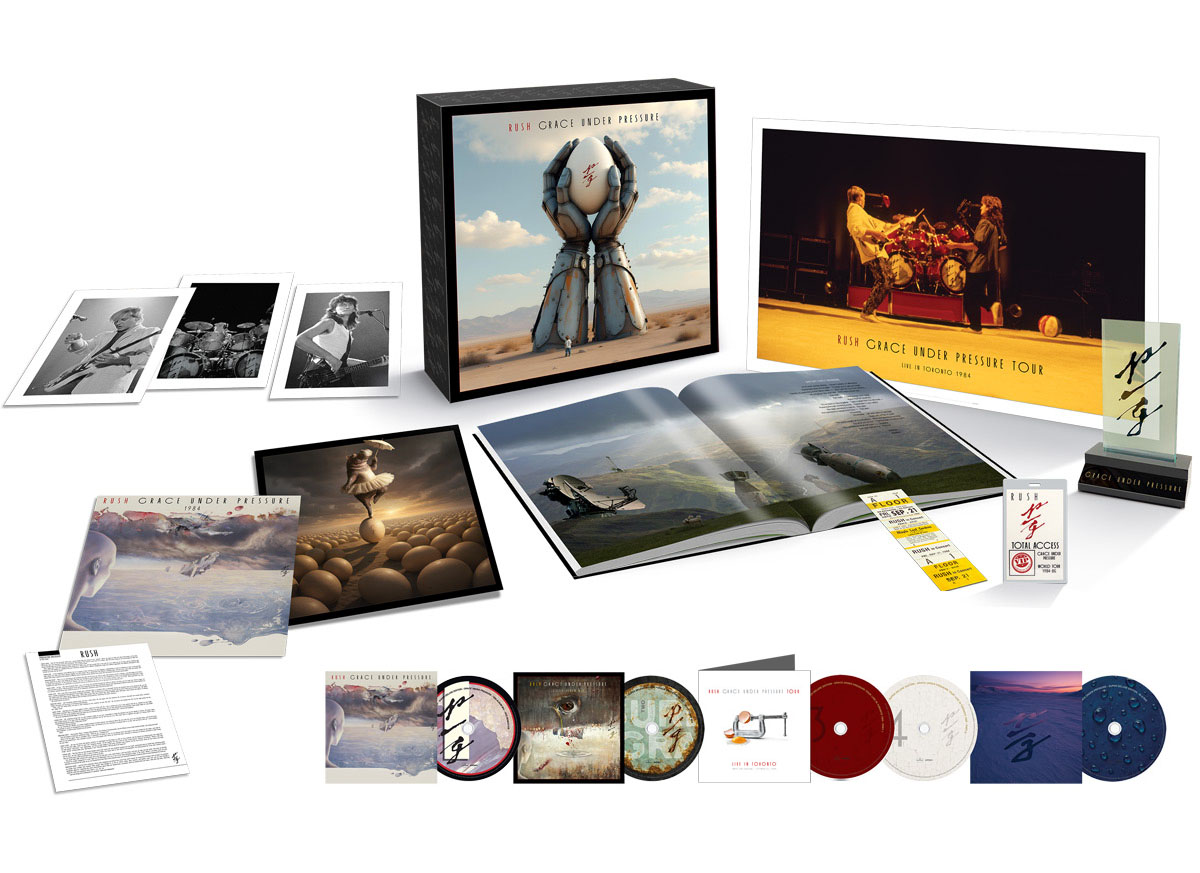
Smartphone Wallpaper
Our RUSH smartphone wallpapers have been modified for a 9:19.5 aspect ratio to fit "most" Smartphones.